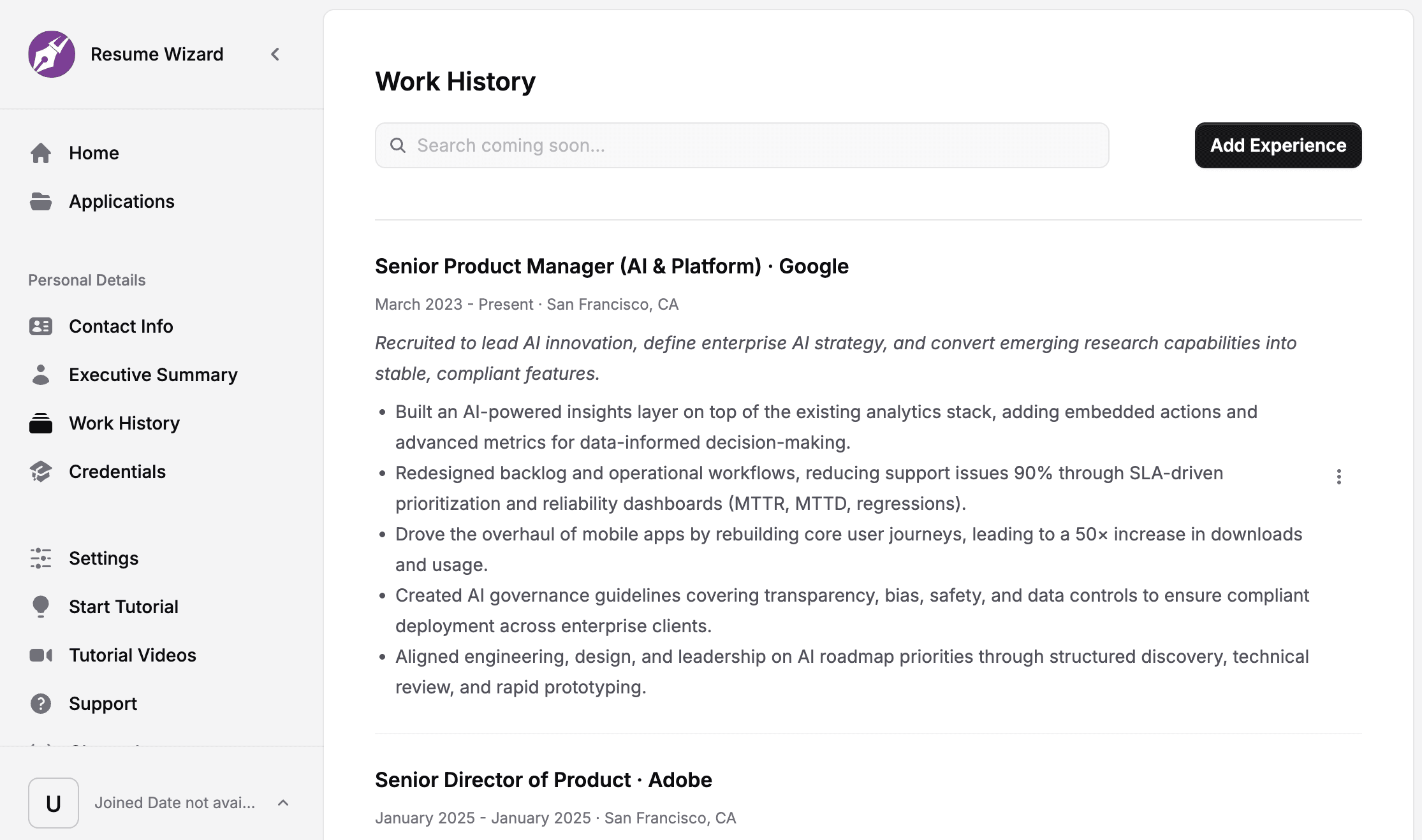
Most people treat their latest resume as the master record of their career. That creates a quiet problem: anything removed to fit one page can disappear from future applications too.
A career inventory solves this. It is a private, complete record of the work you have done and the evidence you may want to reuse. A resume is simply one edited view of that inventory.
What belongs in a career inventory
Capture more than job titles and dates. For each role, include:
- The scope you owned: customers, regions, budgets, systems, or teams
- Important projects and why they mattered
- Decisions you influenced or made
- Results, including the baseline when you know it
- Tools, methods, and domain knowledge you actually used
- Recognition, promotions, and expanded responsibilities
- Useful artifacts such as launch notes, reviews, or public work
Do not worry about resume-ready prose at first. Completeness is more valuable than polish.
Recover evidence while it is still available
Memory gets vague quickly, especially after changing jobs. Look through materials you are allowed to keep: performance reviews, project plans, calendars, status updates, and personal notes. Never copy confidential information or retain company documents you do not own.
When exact figures are not available, record the shape of the outcome without manufacturing precision. “Reduced a multi-day review to a same-day workflow” is more credible than a percentage you cannot support.
Write small evidence units
Long narratives are hard to reuse. Store achievements as compact units with four fields:
- Context: What needed to change?
- Action: What did you personally do?
- Outcome: What became better?
- Skills: What capabilities did the work demonstrate?
For example:
Renewal reporting lived in three spreadsheets. I mapped the workflow, partnered with operations on a shared view, and created a weekly review cadence. Account teams could identify at-risk renewals earlier. Skills: process design, stakeholder management, reporting.
That record can later become different bullets for operations, customer success, or program management roles without changing the underlying truth.
Keep “used” separate from “familiar with”
Skill lists become noisy when every passing exposure is treated equally. A simple confidence scale makes the inventory more honest:
- Applied: Used independently to deliver work
- Working: Used with support or in a limited scope
- Familiar: Understand the concept but have not relied on it professionally
Only include skills on a resume at the level the role and your experience justify.
Make maintenance lightweight
Set a recurring reminder every month or at the end of a meaningful project. Add a few notes while the work is fresh. Also update the inventory when your scope changes, not only when your title changes.
The habit can take ten minutes. Reconstructing several years of work under application pressure can take days.
Turn the inventory into a targeted resume
When a role interests you, filter the inventory for relevant outcomes and skills. Select the strongest evidence, order it for the reader, and then edit it into concise resume language.
This approach makes tailoring faster, but its bigger benefit is accuracy. You are choosing from documented experience instead of improvising from memory.
Put the advice to work
Build a focused resume for your next role.
Keep your experience in one place, then tailor the strongest evidence to each opportunity.
Build my resume